Whatsapp:+86 18339211009 Address: 1000 meters west of the gate of Yanjin County Forest Park, Xinxiang City, Henan Province.
Feeding Amount of Screw Feeder to the total amount of material that the equipment can stably convey and discharge per unit time. It is a core technical indicator for measuring the equipment's conveying capacity, typically measured in tons per hour, directly reflecting the equipment's feeding speed and maximum conveying capacity. The feed rate directly determines the material supply rhythm of the production line, and equipment selection, process allocation, and capacity planning all use this data as a reference. Furthermore, the feed rate is not a fixed value; it is affected by factors such as screw speed, blade specifications, material density, and filling coefficient. Reasonable control of the feed rate is essential to ensure the smooth operation of the entire production line.
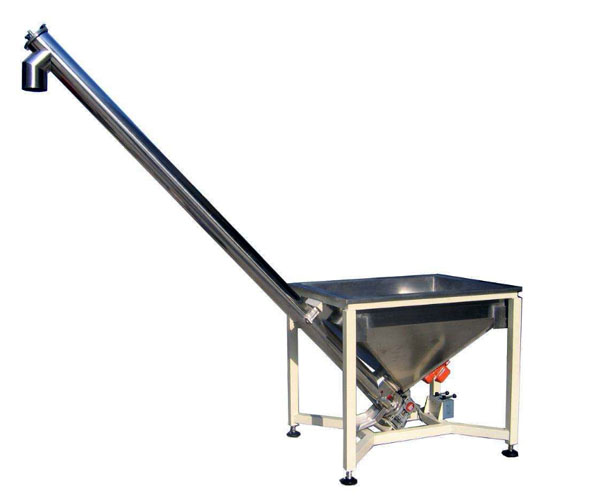
The feeding amount of different types of Screw Feeder is different, mainly depends on factors such as the diameter of the machine body, screw pitch and rotational speed. Generally speaking, the larger the feeding volume of the Screw Feeder, the larger the diameter and pitch of the body need to be increased accordingly.
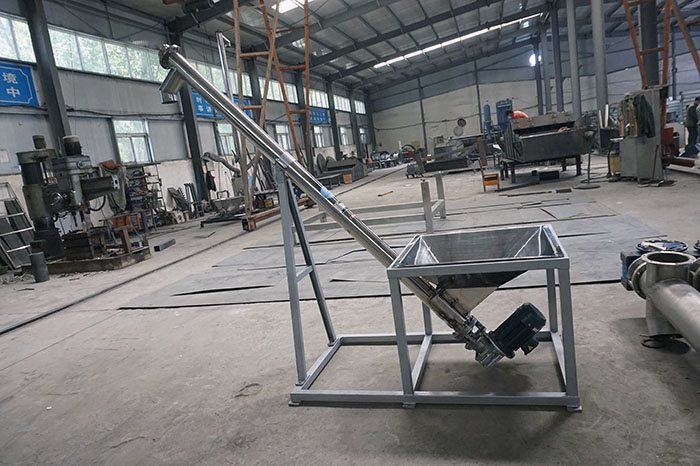
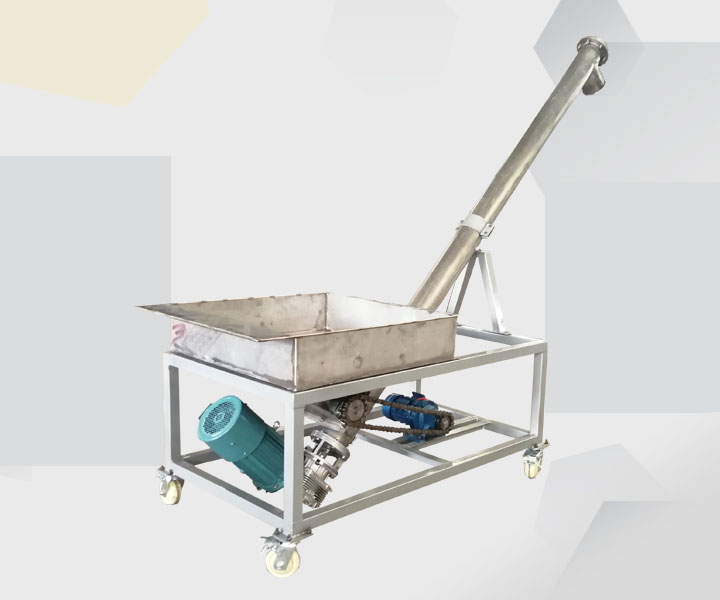
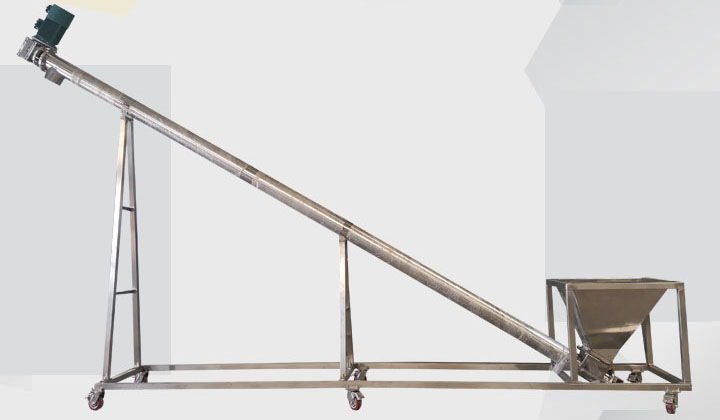
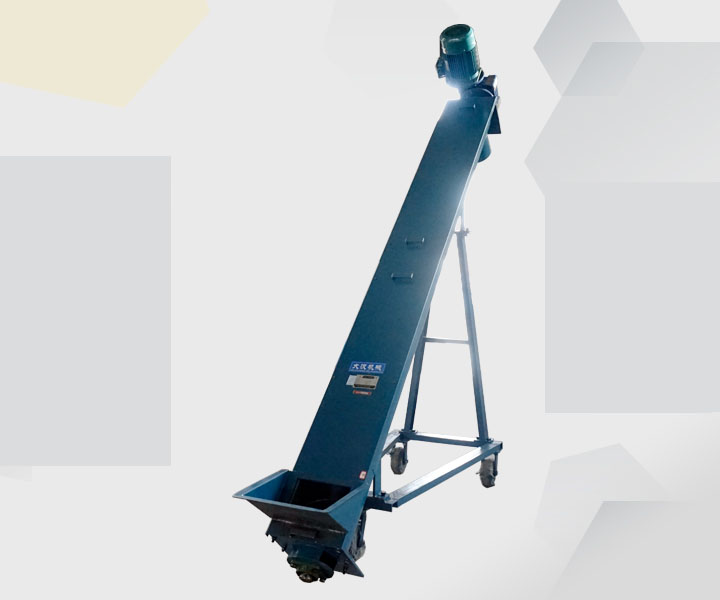
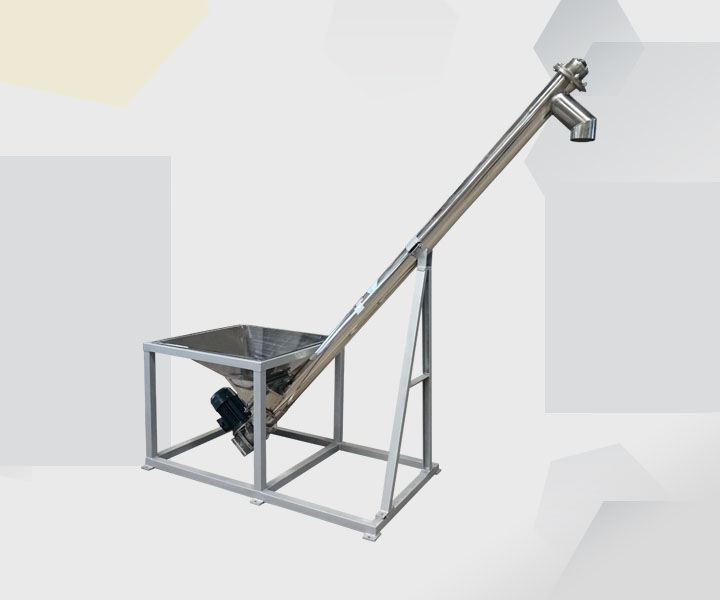
GX200 Screw Feeder: A small conveying device suitable for conveying various powders and granular materials. It has a 100mm shaft diameter and a 200mm wheelbase, operating at 140 rpm. The stable operating speed and smooth start-stop ensure precise material conveying. The standard feed rate is 4.4 tons/hour, offering high conveying accuracy and uniform, stable output, meeting the continuous feeding needs of small production lines.
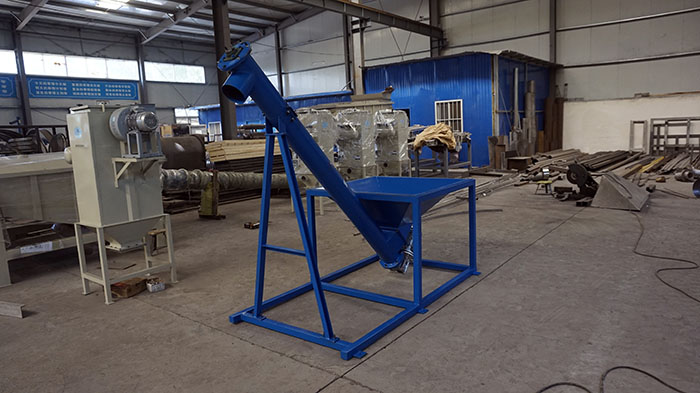
GX250 Screw Feeder: A medium-sized conveying device with significantly improved conveying performance compared to the GX200 model. Suitable for material conveying in small to medium-sized industrial production lines, it is widely used in industries such as chemicals, food, and building materials. Equipped with a 125mm shaft diameter and a 250mm wheelbase, it boasts stronger structural load-bearing capacity and significantly improved operational stability. The rated operating speed is 112 rpm, offering strong speed adaptability and allowing for fine-tuning of the feeding rhythm according to production needs. Its standard feed rate can reach 7.3 tons/hour.
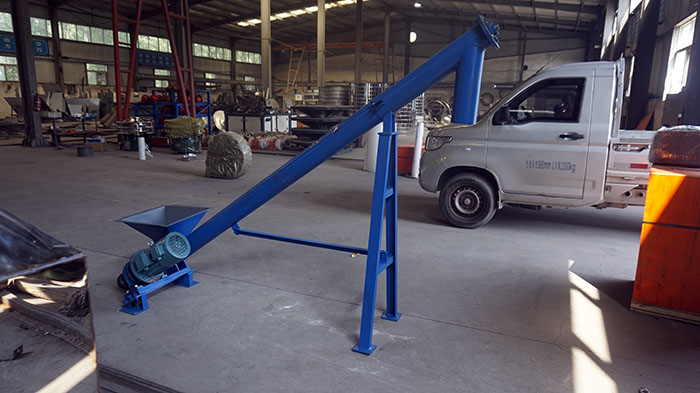
GX300 Screw Feeder: A medium-sized main conveying equipment. With a shaft diameter of 140 mm and a wheelbase of 300 mm, its larger body structure significantly enhances material handling and pushing capacity. Its robust structure allows it to withstand long-term continuous heavy-duty operation. The rated feeding rate reaches 11.8 tons/hour, meeting the feeding needs of medium-capacity production lines.
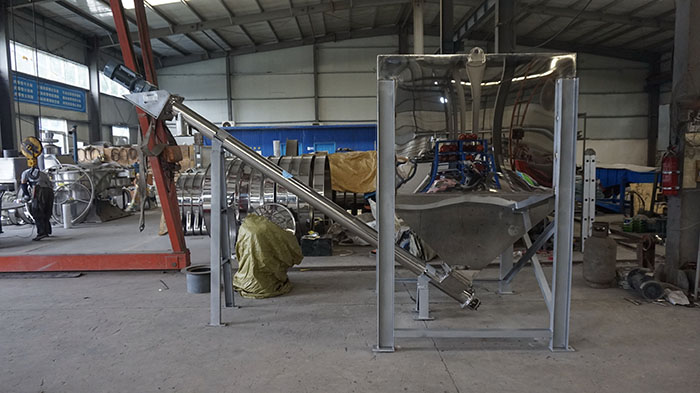
GX400 Screw Feeder: Primarily designed for heavy-duty conveying, suitable for large-scale industrial production scenarios such as large mines, building materials, and metallurgy. With a shaft diameter of 150 mm and a wheelbase of 400 mm, it can handle continuous conveying of large quantities of materials. Its rated speed is 71 rpm. The low-speed, high-torque operating mode effectively reduces equipment wear and energy consumption, ensuring more stable operation under heavy loads.
| LS type | 100 | 160 | 200 | 250 | 315 | 400 | 500 | 630 | 800 | 1000 | 1250 |
| GX type | 200 | 250 | 300 | 400 | 500 | ||||||
| Spiral diameter (mm) | 100 | 160 | 200 | 250 | 315 | 400 | 500 | 630 | 800 | 1000 | 1250 |
| Pitch (mm) | 100 | 160 | 200 | 250 | 315 | 355 | 400 | 450 | 500 | 560 | 630 |
| Speed (r/min) | 140 | 120 | 90 | 90 | 75 | 75 | 60 | 60 | 45 | 35 | 30 |
| Delivery capacity QΦ=0.33 (m³/h) | 2.2 | 7.6 | 11 | 22 | 36.4 | 66.1 | 93.1 | 160 | 223 | 304 | 458 |
| 功率Pd 1=10m(KW) | 1.1 | 1.5 | 2.2 | 2.4 | 3.2 | 5.1 | 4.1 | 8.6 | 12 | 16 | 24.4 |
| Power Pd 1=30m (KW) | 1.6 | 2.8 | 3.2 | 5.3 | 8.4 | 11 | 15.3 | 25.9 | 36 | 48 | 73.3 |
| Speed (r/min) | 120 | 90 | 75 | 75 | 60 | 60 | 45 | 45 | 35 | 30 | 20 |
| Delivery capacity QΦ=0.33 (m³/h) | 1.9 | 5.7 | 18 | 18 | 29.1 | 52.9 | 69.8 | 125 | 174 | 261 | 305 |
| Power Pd 1=10m (KW) | 1.0 | 1.3 | 2.1 | 2.1 | 2.9 | 4.1 | 4.7 | 6.8 | 9.4 | 14.1 | 16.5 |
| Power Pd 1=30m (KW) | 1.5 | 2.3 | 4.5 | 4.5 | 7 | 8.9 | 11.6 | 20.4 | 28.3 | 42.2 | 49.5 |
| Speed (r/min) | 90 | 75 | 60 | 60 | 45 | 45 | 35 | 35 | 30 | 20 | 16 |
| Delivery capacity QΦ=0.33 (m³/h) | 1.4 | 4.8 | 15 | 15 | 21.8 | 39.6 | 54.3 | 97 | 149 | 174 | 244 |
| Power Pd 1=10m (KW) | 0.9 | 1.2 | 1.9 | 1.9 | 2.5 | 3.4 | 4.3 | 5.4 | 8.1 | 9.5 | 13.3 |
| Power Pd 1=30m (KW) | 1.2 | 2.2 | 3.8 | 3.8 | 5.4 | 6.8 | 9.2 | 16 | 24.4 | 28.6 | 39.9 |
| Speed (r/min) | 75 | 60 | 45 | 45 | 35 | 35 | 30 | 30 | 20 | 16 | 13 |
| Delivery capacity QΦ=0.33 (m³/h) | 1.2 | 3.8 | 11 | 11 | 17 | 31.7 | 46.5 | 73.0 | 99.3 | 139 | 199 |
| Power Pd 1=10m (KW) | 0.75 | 1.1 | 1.6 | 1.6 | 2.1 | 3.1 | 3.7 | 4.6 | 5.7 | 7.7 | 11 |
| Power Pd 1=30m (KW) | 1.1 | 1.8 | 3.4 | 3.4 | 4.4 | 5.6 | 8 | 14 | 16.7 | 23.2 | 33 |
The feeding amount of a screw feeder is not a fixed value and is influenced by multiple factors. The equipment's structural specifications, operating status, the characteristics of the conveyed material, and the on-site installation and usage conditions all directly affect the output volume per unit time.
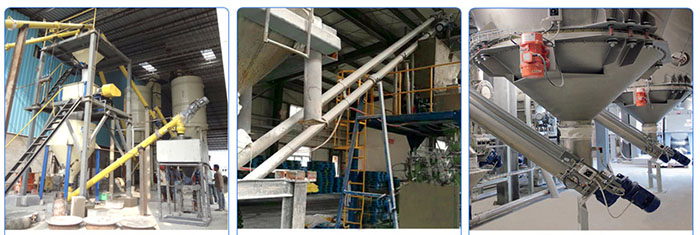
Material properties: The density, humidity, particle size, viscosity and fluidity of the material will affect the feeding amount of the Screw Feeder. If the humidity and viscosity of the material are high, the feeding amount will be reduced; if the material density is high, the feeding amount will be large; if the particle size of the material is large, the feeding amount will be small; if the material fluidity is poor, the feeding amount will also be affected.
Screw parameters: parameters such as the diameter, pitch, and speed of the screw will affect the feeding amount of the Screw Feeder. The larger the screw diameter and pitch, the larger the feeding volume of the Screw Feeder; the faster the speed, the larger the feeding volume.
Design of feed inlet: Whether the design of feed inlet is reasonable, the speed, uniformity and density of feeding will affect the feeding amount of Screw Feeder. If the design of the feed inlet is unreasonable, it will affect the uniformity of the material and the feeding speed, thereby affecting the feeding amount.
Operating conditions: operating conditions will also affect the feeding volume of the Screw Feeder. Such as motor power, voltage, current, etc. have an impact on the stability and efficiency of Screw Feeder operation.
Maintenance: During long-term operation, the Screw Feeder may fail due to wear, looseness and other reasons, so timely maintenance will also affect the feeding amount. If the daily maintenance of the equipment is not proper, it will cause serious damage to the parts, and it will be difficult to maintain the feeding rate in a stable state.
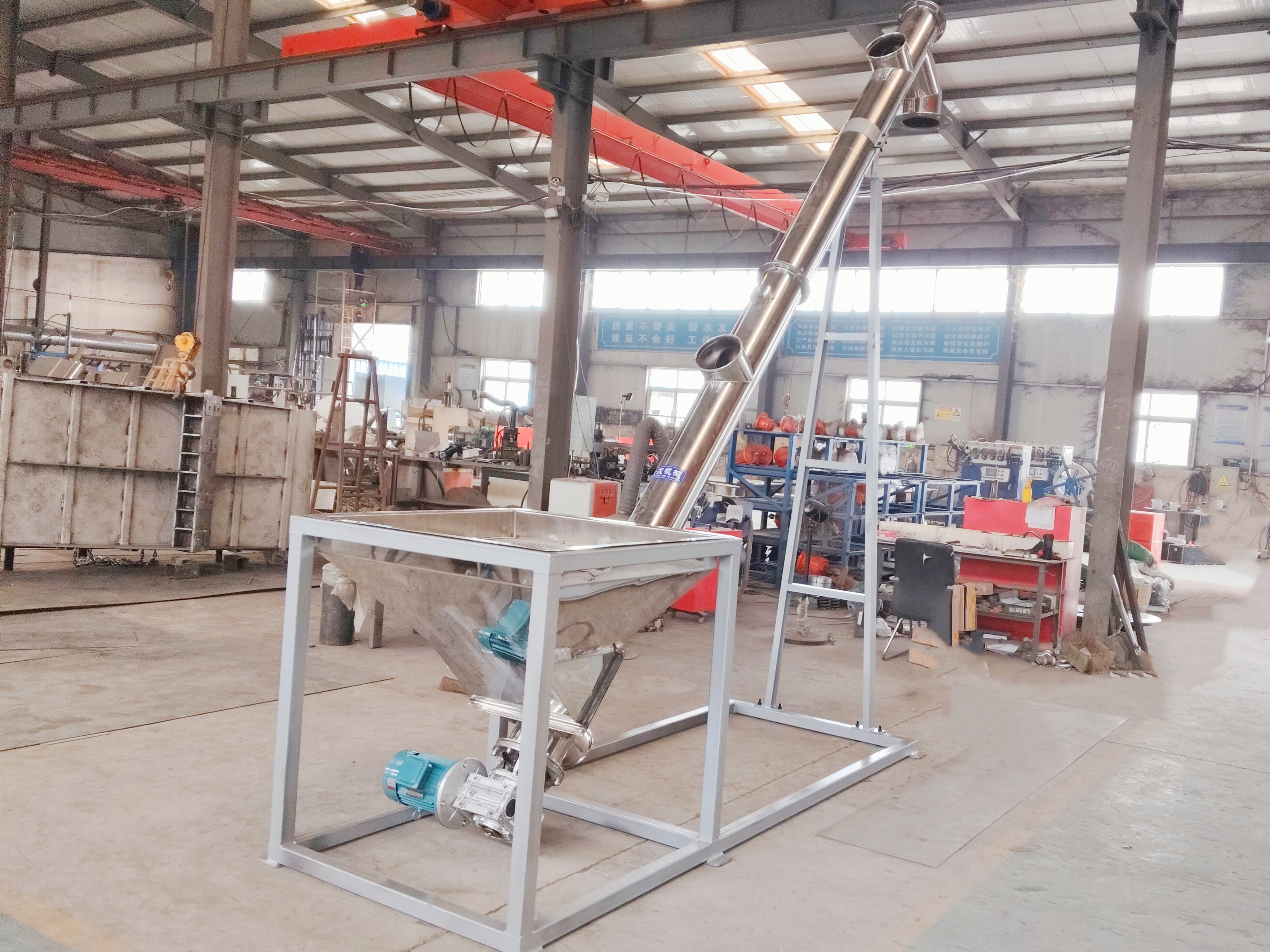
To sum up, the feeding amount of Screw Feeder is affected by many factors. When selecting and using the Screw Feeder, factors such as material properties, screw parameters, feed inlet design, operating conditions and maintenance need to be considered to ensure stable and efficient feeding. At the same time, it is also necessary to select a suitable model according to actual needs to meet production needs.
Does the speed of a screw feeder affect the feed rate?
Yes, it directly affects the feed rate. For the same specifications, a faster speed means the blades push material more frequently, increasing the output per unit time. Lowering the speed reduces the feed rate.
Why do different types of materials cause differences in feed rate?
Material density, wetness, particle size, looseness, and flowability vary, as do their filling space ratios, resulting in differences in the actual output volume.
What role do machine specifications and dimensions play in the feed rate?
Larger shaft diameter and wheelbase allow for a larger volume of material to be conveyed per cycle, resulting in stronger basic conveying capacity. Under the same operating conditions, larger models have a significantly higher feed rate than smaller machines.
Will daily operating conditions change the feed rate?
Installation angle, feed flow, and machine wear all have an impact. A large tilt angle or obstructed feed will cause the actual feed rate to fall short of the rated standard.
NOTE: You can also send a message to us by this email sale@xxdahan.com, we will reply to you within 24 hours. Now tell us your needs, there will be more favorable prices!