Whatsapp:+86 18339211009 Address: 1000 meters west of the gate of Yanjin County Forest Park, Xinxiang City, Henan Province.
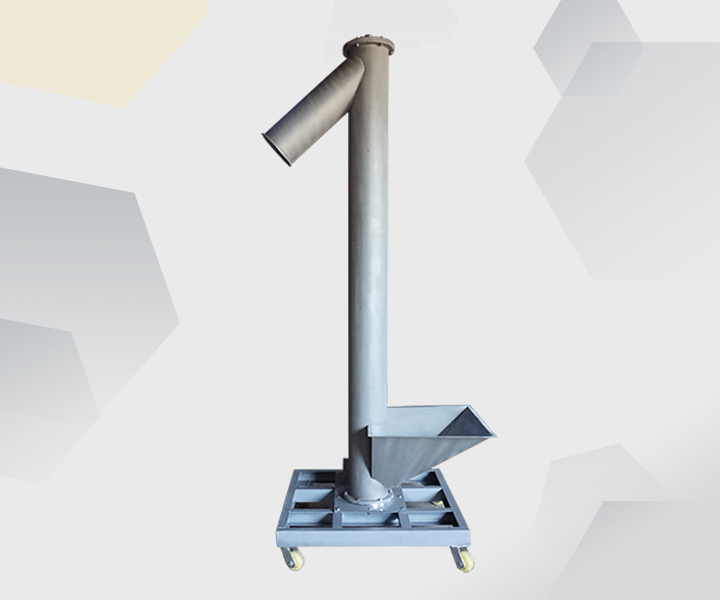
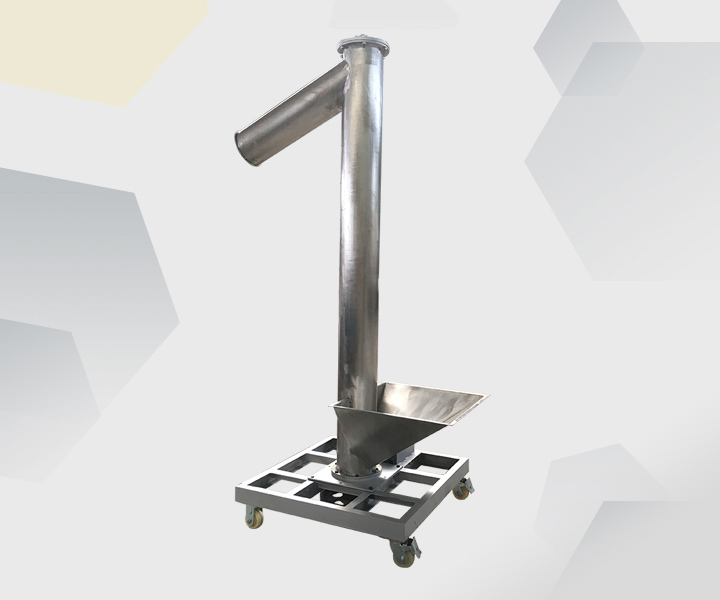
Feed for Vertical Conveyor is a screw conveyor used to transport powders or granules from the ground to higher elevations. It can flexibly select from three mainstream materials—carbon steel, stainless steel, and polypropylene—depending on material characteristics and application scenarios. With a maximum lifting height of 6 meters, it can meet the needs of mid-to-high-level material conveying. Standard models can achieve a maximum output of 20 tons per hour, offering fast conveying efficiency and stable operation. The equipment also supports comprehensive non-standard customization, optimizing the design based on the user's site space, material properties, conveying volume, and lifting height requirements. It features strong sealing, low dust emission, and effectively ensures cleanliness and continuity of production.
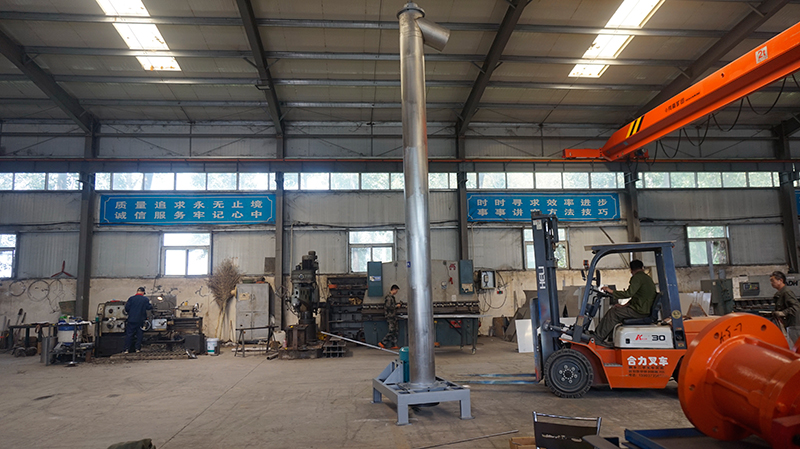
We sell multiple vertical conveyors, supporting non-standard customization. They operate with sealed dustproof systems, ensuring smooth and stable conveying, and are suitable for feed production processes such as feeding, transfer, and dispensing, adapting to various livestock and feed processing scenarios.
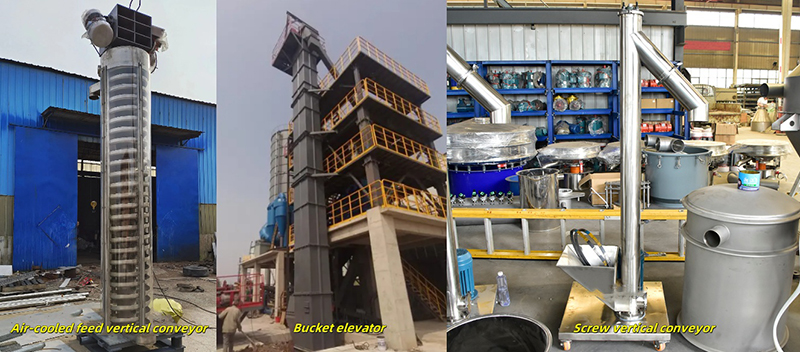
Bucket elevator: It uses a hopper for continuous conveying, which is suitable for granular and powdered feed. The lifting height can reach 50 meters, with stable operation and low noise.
Screw vertical conveyor: closed conveying structure, especially suitable for dusty materials, but its vertical height can only reach 6 meters.
Air-cooled feed vertical conveyor: designed to solve the problem of thermal damage during high-temperature feed transportation. The equipment integrates mechanical conveying and air cooling technology to ensure that the temperature of the feed is always controlled within the safety threshold during transportation, solving the problem of high-temperature feed agglomeration.
The vertical screw conveyor boasts a compact structure and small footprint, enabling the vertical lifting and transfer of powder and granular materials. Its sealed design minimizes material spillage and dust leakage, ensuring smooth operation and preventing material jamming. Adaptable to various working conditions, it can reliably connect upstream and downstream processes, meeting the needs of continuous material conveying.
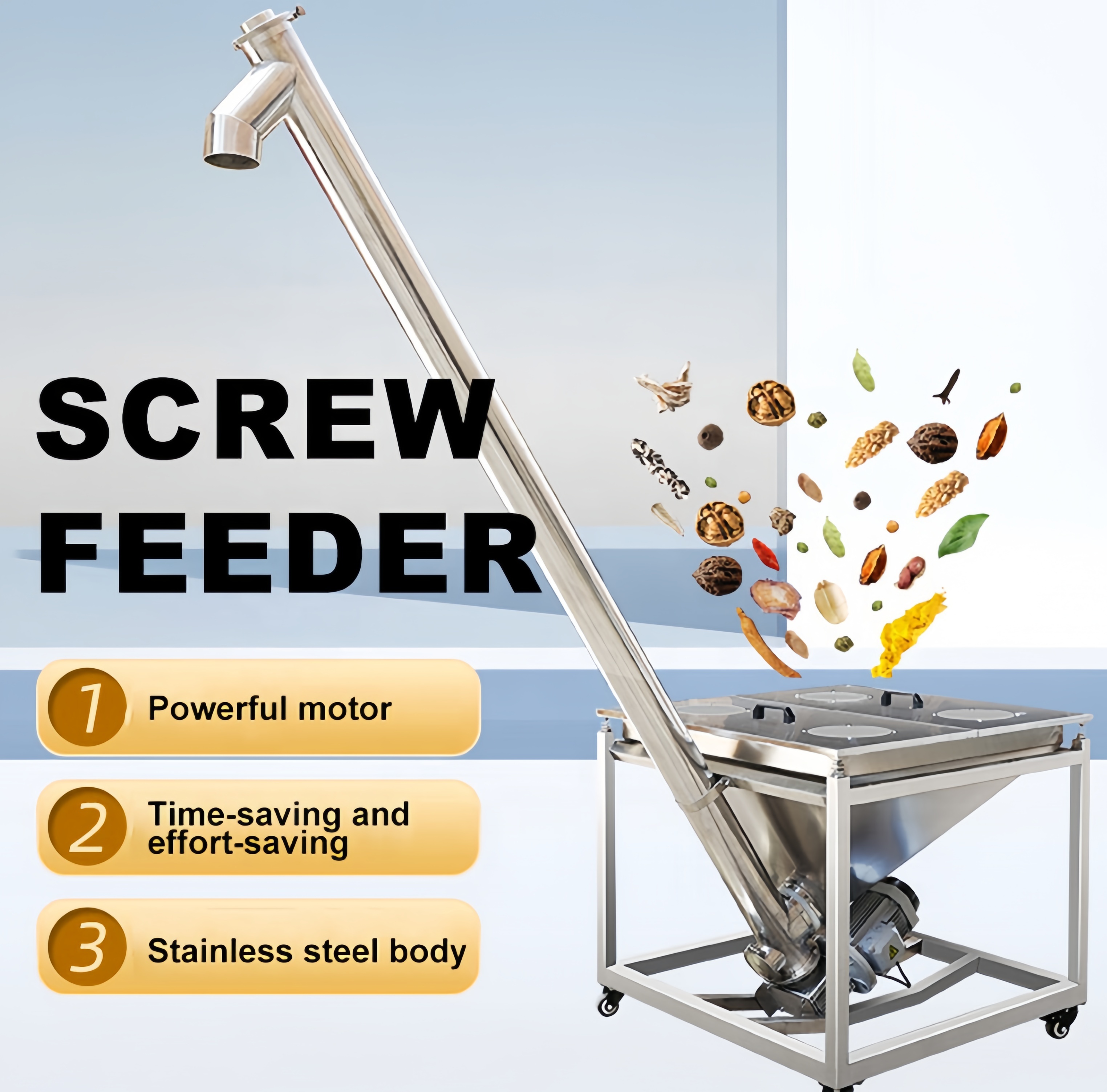
Efficient lifting: Feed for vertical conveyor can quickly and efficiently lift materials vertically to the required height, improving production efficiency.
Space saving: Since the materials are lifted vertically, the feed for vertical conveyor takes up less horizontal space and is suitable for places with limited space.
Maintain material quality: Feed for vertical conveyor can maintain the integrity and quality of materials and reduce material breakage and damage during material transportation.
Reliable and stable: Feed for vertical conveyor adopts reliable driving device and guide device to ensure stable transportation of materials and reduce failure rate.
First, the material is placed at the feed port on the conveyor belt or barrel chain. The drive is then activated and the conveyor belt or bucket chain begins to move. The material is gradually lifted to the required height with the movement of the conveyor belt or bucket chain. During the vertical lifting process, the guide device on the conveyor belt or bucket chain plays the role of guiding the material to ensure stable transportation of the material. Finally, the material reaches the discharge port and completes the vertical conveying process.
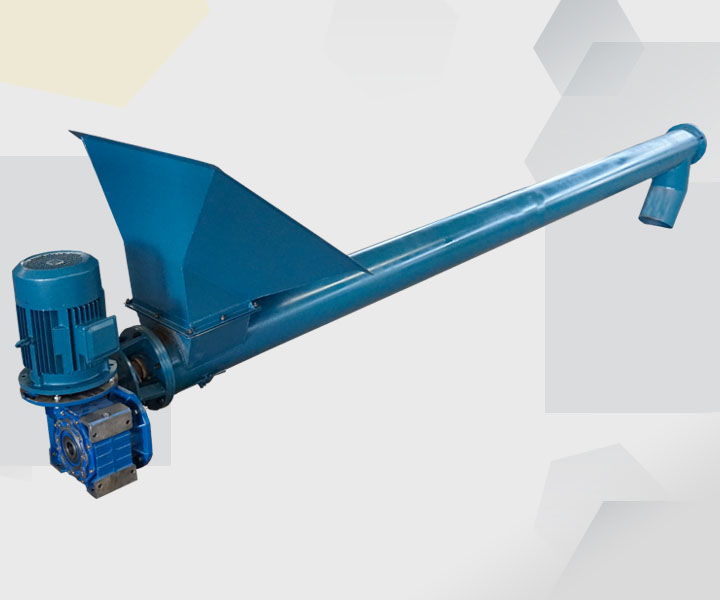
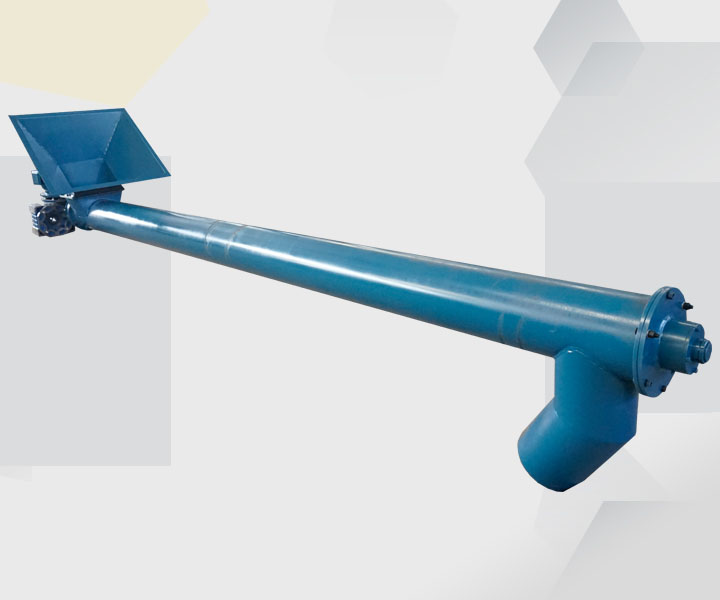
The Feed for Vertical Conveyor is a vertical, enclosed conveying system primarily composed of a drive unit, screw shaft and blades, a sealed housing, support bearings, inlet and outlet ports, and sealing components. These components work in concert, utilizing the thrust of the rotating screw to vertically lift and convey powdery and granular materials.
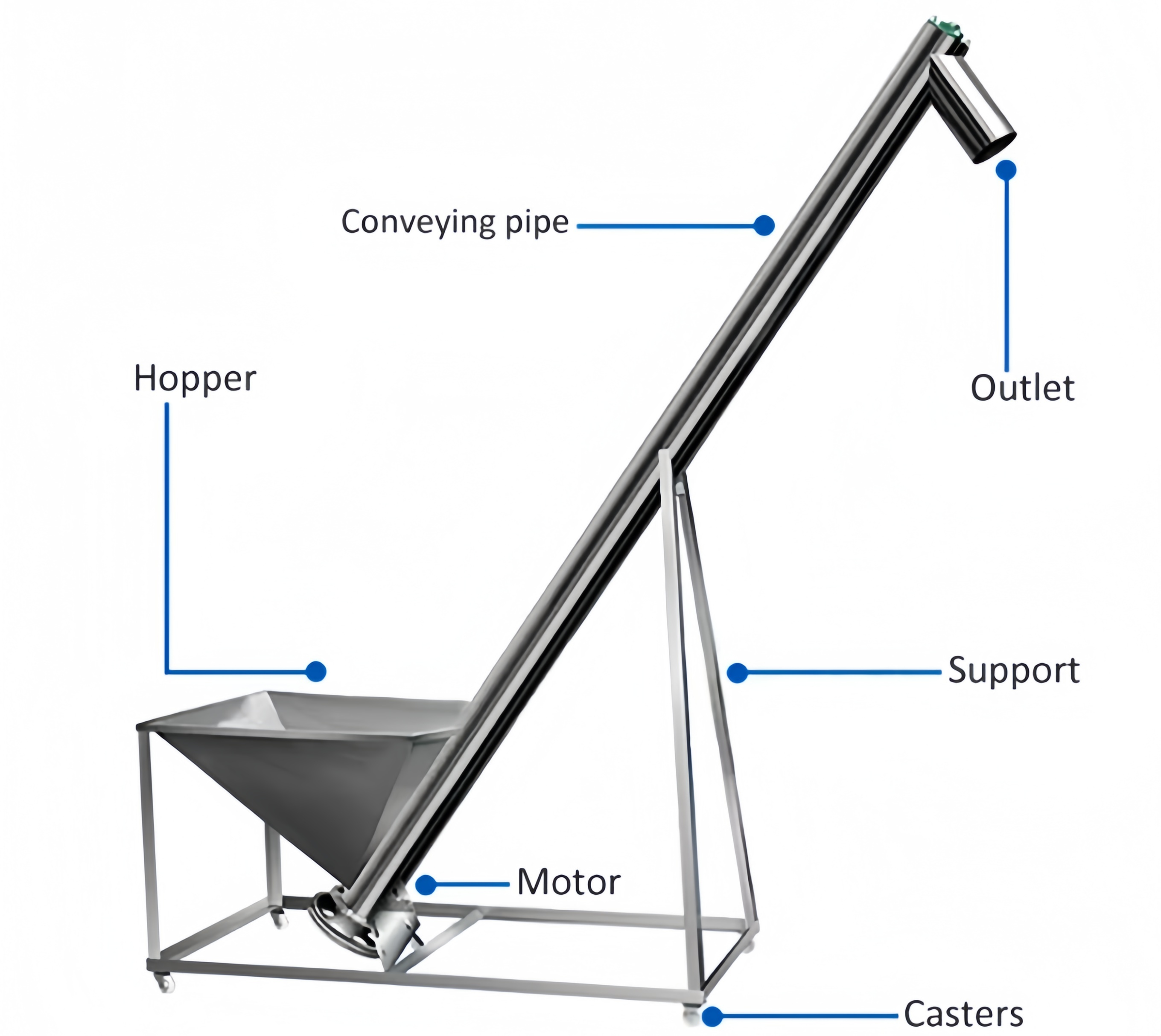
Screw shaft: It is the core component of the screw vertical conveyor, consisting of a shaft and a spiral blade. The spiral blade is usually made of thick steel plate and welded to the shaft.
Trough: It is the conveying channel for materials, usually made of stainless steel or carbon steel, with good wear resistance and corrosion resistance. The shape of the trough is round or square, and its diameter or side length is designed according to the diameter and conveying capacity of the screw shaft.
Drive device: Similar to the drive device of the bucket elevator, it consists of an electric motor, a reducer and a transmission device to provide power for the rotation of the screw shaft.
Bearing: It is used to support the screw shaft to ensure the rotation accuracy and stability of the screw shaft. The bearing is usually a rolling bearing, which is installed at both ends or in the middle of the trough.
Sealing device: Since the screw vertical conveyor needs to maintain a sealed state when conveying materials to prevent material leakage and dust flying, a sealing device is required.
| Specification | LC160 | LC200 | LC250 | LC315 | |
| Diameter(mm) | 160 | 200 | 250 | 315 | |
| Rotating Speed(r/min) | 450 | 450 | 415 | 380 | |
| Capacity(m3/h) | 10 | 28.5 | 51 | 95 | |
| Conveying Height(m) | 2.5~15 | 2.5~15 | 2.5~15 | 2.5~15 | |
| Motor | Height(m) | 2.5~5.5 | 2.5~5.5 | 2.5~4 | 2.5~4 |
| Model | Y100L2-4 | Y100L2-4 | Y132M1-6 | Y160M-6 | |
| Power | 3KW | 3KW | 4KW | 7.5KW | |
| Height(m) | 6~7 | 6~7 | 4.5~5.6 | 4.5~6 | |
| Model | Y112M-4 | Y112M-4 | Y132M2-6 | Y160L-6 | |
| Power | 4KW | 4KW | 5.5KW | 11KW | |
| Height(m) | 7.5~10 | 7.5~10 | 6~7.5 | 6.5~8 | |
| Model | Y132S-4 | Y132S-4 | Y160L-6 | Y160L-6 | |
| Power | 5.5KW | 5.5KW | 7.5KW | 15KW | |
| Height(m) | 10.5~13.5 | 10.5~13.5 | 8~11 | 8.5~12 | |
| Model | Y132S-4 | Y132M-4 | Y160L-6 | Y180L-6 | |
| Power | 7.5KW | 7.5KW | 11KW | 11KW-2 | |
| Height(m) | 14~15 | 14~15 | 11.5~15 | 12.5~15 | |
| Model | Y160M-4 | Y160M-4 | Y180L-6 | Y180L-6 | |
| Power | 11KW | 11KW | 15KW | 15KW-2 | |
A food processing company purchased the Feed for Vertical Conveyor for vertical transfer of wheat kernels and grain powders within its workshop. The entire machine is constructed of 304 stainless steel, meeting food production hygiene standards. Installed in a compact production line area, it has a lifting height of 4 meters and a conveying capacity of 8 tons of material per hour. During operation, there is no material breakage or dust leakage. The machine body is rust-resistant and easy to clean, stably connecting upstream and downstream processes, significantly improving the automation efficiency of raw material transfer.
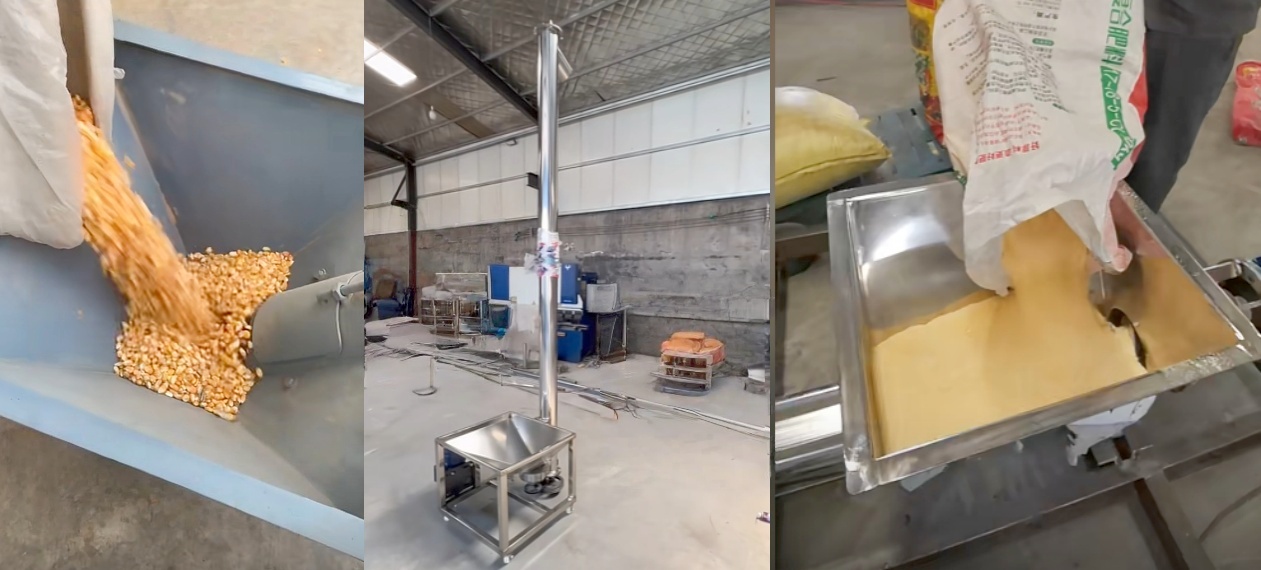
The Feed for Vertical Conveyor boasts excellent sealing performance and a compact footprint. It can vertically convey powdery and granular materials, making it suitable for a wide range of applications. It is particularly popular in the food, feed processing, and fine chemical industries, while also serving the building materials, mining, and pharmaceutical manufacturing industries. It can meet the material lifting and transfer needs under various working conditions

Metallurgical industry: used to vertically lift ore, slag and other materials to smelting equipment or storage warehouses.
Chemical industry: suitable for transporting chemical raw materials, powdery materials, etc. to reactors, mixing equipment or storage tanks.
Mining industry: used to lift coal, ore, slag and other materials to mineral processing equipment, stockyards or shipping equipment.
Building materials industry: Suitable for lifting cement, limestone, sand and other materials to mixing equipment, mortar production lines or storage warehouses.
Grain processing industry: used to vertically lift grain, feed and other materials to cleaning equipment, dryers or storage warehouses.
First, determine the installation location and height and ensure there is adequate support structure. Then, the drive unit and conveyor belt or bucket chain are installed, commissioned and tested. When in use, place the material at the feed port and start the driving device to ensure that the material is smoothly lifted vertically to the required height. Pay attention to regularly checking the operating status and maintenance of the equipment to ensure safe and stable use. During the operation, relevant safety regulations and operating procedures must be followed to ensure the safety of personnel and equipment.
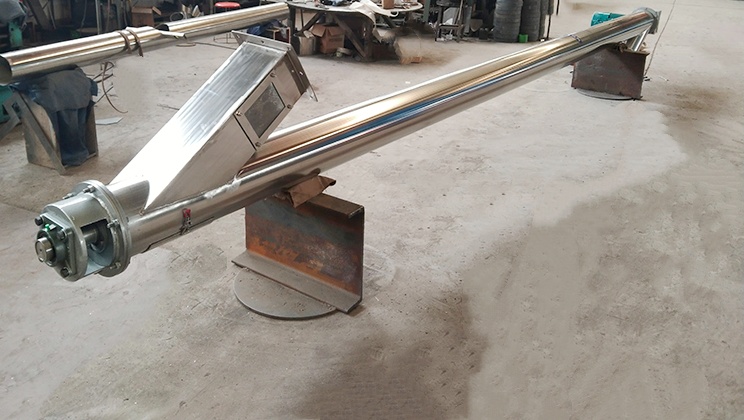
In short, the feed for vertical conveyor is an efficient and reliable material conveying equipment that transports materials from low to high through vertical lifting. It plays an important role in multiple industries, improving production efficiency, saving space, and maintaining material integrity and quality.
How to calculate the motor power of a vertical feed conveyor?
Calculate the basic torque based on the material conveying capacity, lifting height, and material specific gravity. Then, calculate the shaft power by considering the conveying angle, running resistance, and equipment loss coefficient. Select the appropriate power rating by comparing it with standard motor parameters. For heavy-load and high-drop conditions, the power rating needs to be appropriately increased.
What materials are best suited for air-cooled vertical screw conveyors?
Dry powdery and granular materials are best suited. Common grains, plastic granules, chemical powders, fine sand and gravel, and feed ingredients can all be used. Moist, clumpy, highly viscous, and easily heat-generating materials are not suitable.
How to select a vertical screw conveyor?
First, determine the material properties, conveying height, and hourly conveying capacity, and confirm the installation space. Select a sealing and cooling structure based on the operating conditions, verify the cylinder material and motor configuration, compare the equipment's wear resistance and energy consumption indicators, and determine the appropriate model and specifications based on the actual production conditions.
NOTE: You can also send a message to us by this email sale@xxdahan.com, we will reply to you within 24 hours. Now tell us your needs, there will be more favorable prices!